GOTESQUES, GARGOYLES, AND OTHER ADORNIMENTS
Gargoyle sculptures are carved stone figures designed to serve as rain gutter waterspouts on, primarily, gothic buildings. They were also believed to serve as protectors that ward off evil spirits, or as "visual sermons" representing the consequences of sin in the Middle Ages. Not to be confused with grotesques, a true gargoyle must serve as a waterspout.
Grotesque sculptures, frequently found perched on, or projecting from, cathedrals, are carved, ornamental figures that are decorative or symbolic. Symbolically, they were believed to serve as protectors warding off evil spirits or representing the chaos of the world outside the church, acting as "visual sermons".
Coats of arms on medieval buildings served as decorative, symbolic, and heraldic markers of patronage, power, and lineage, commonly carved in stone or featured in stained glass. Primarily found on cathedrals, town halls, and castles, these emblems identified royal, noble, or civic founders and patrons.
There are many examples of all three throughout Great Britton, and I have also photographed some in Eastern Europe. There’s something about their mystery and timelessness that draws me to photograph them. Unfortunately, many outdoor carvings show various levels of erosion, and many more have eroded into unrecognizable lumps.
It was a time when the message was more important than the cost, and buildings were meant to last for centuries.
(Click on photo to enlarge)
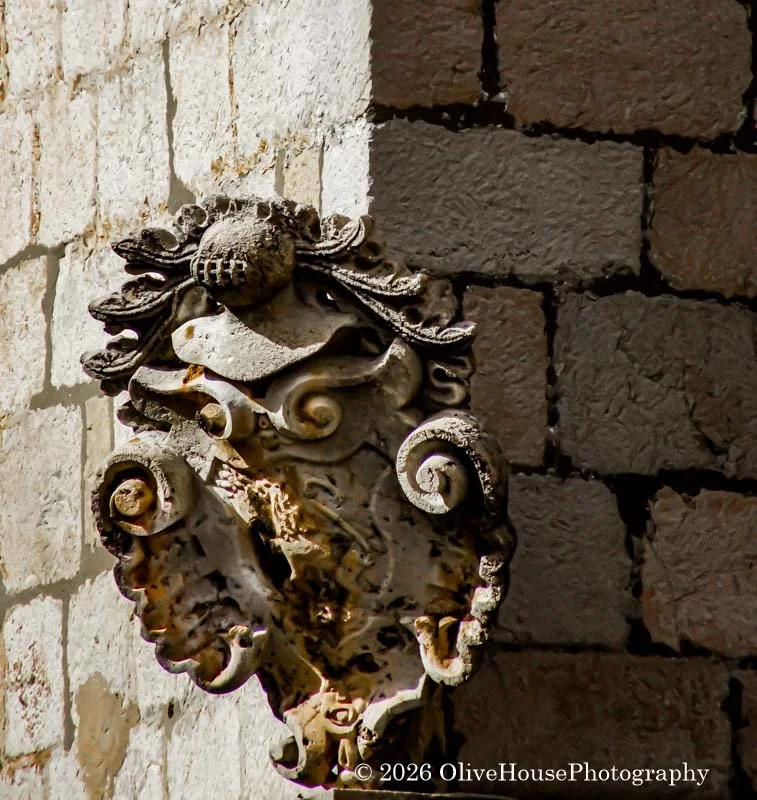
Coat of Arms on a building in Dubronvik, Croatia.
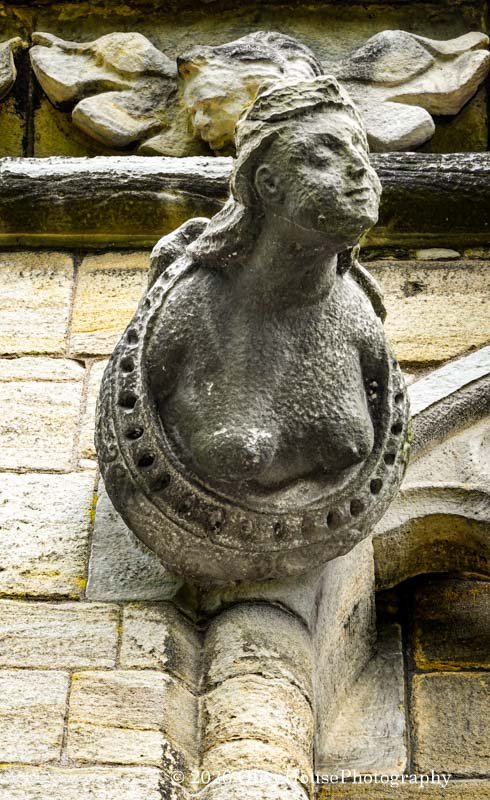
Grotesque on the exterior wall of Stirling Castle, Scotland.
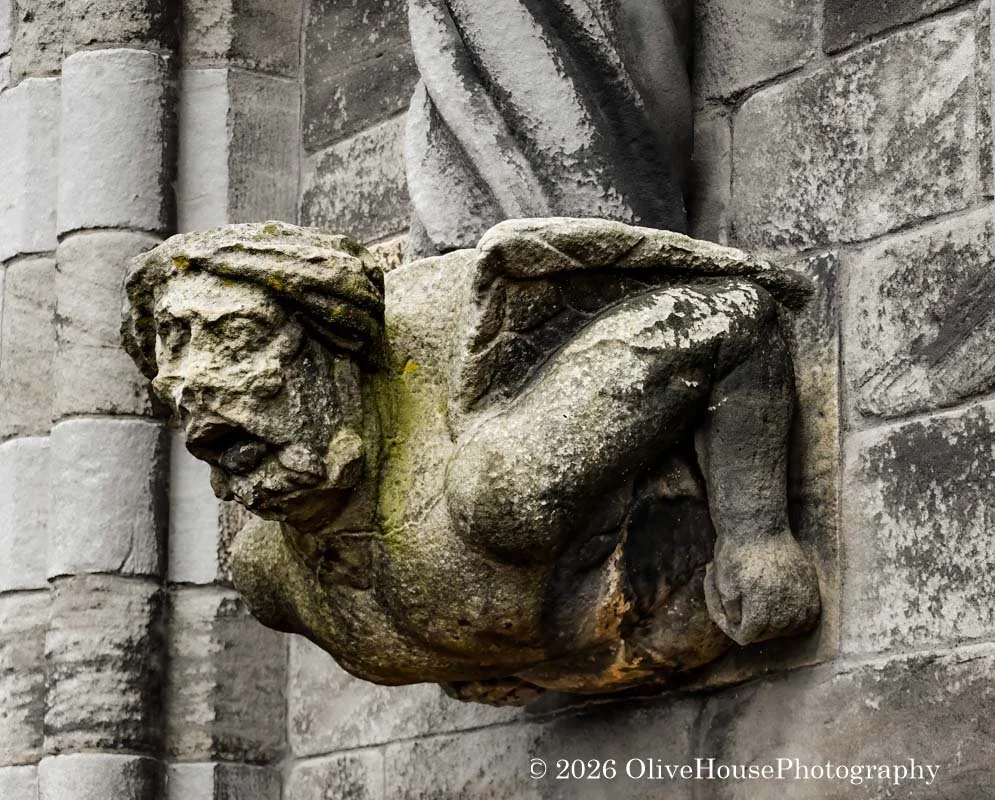
Gargoyle on the Royal Palace of Stirling Castle in Scotland.
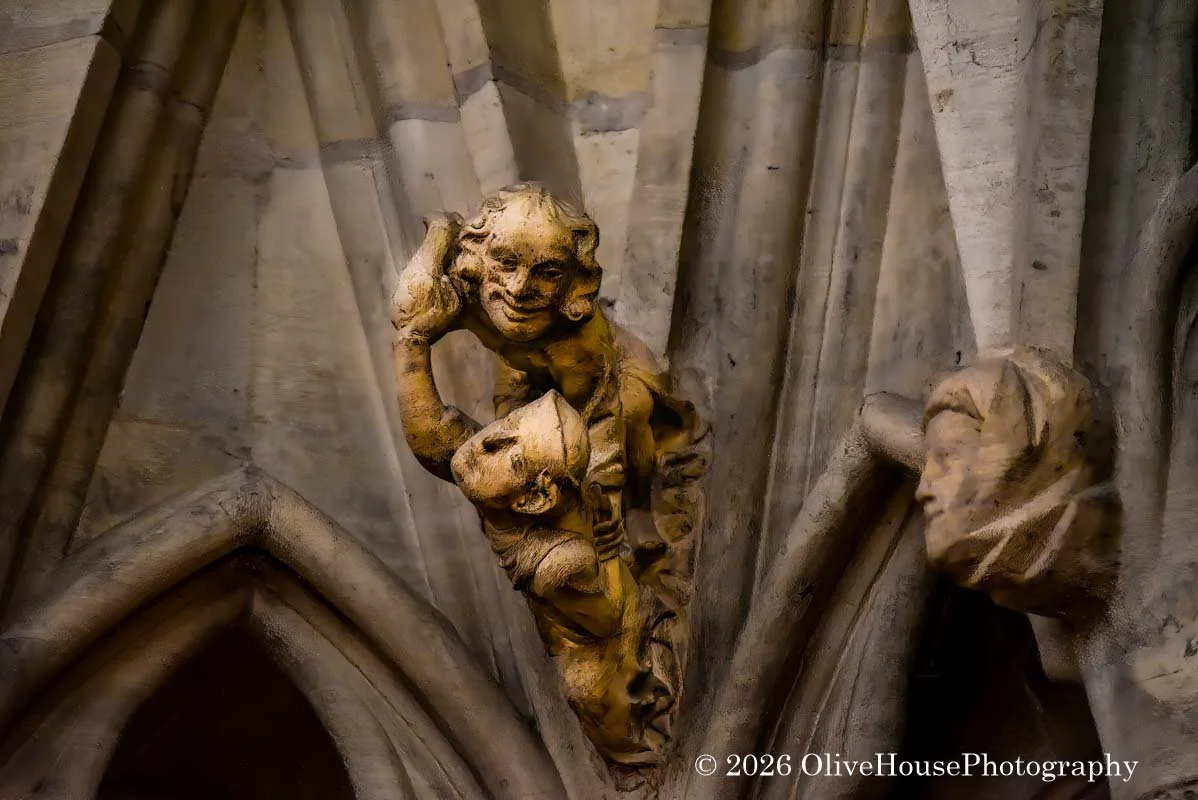
Grotesque inside York Minster, York, England.
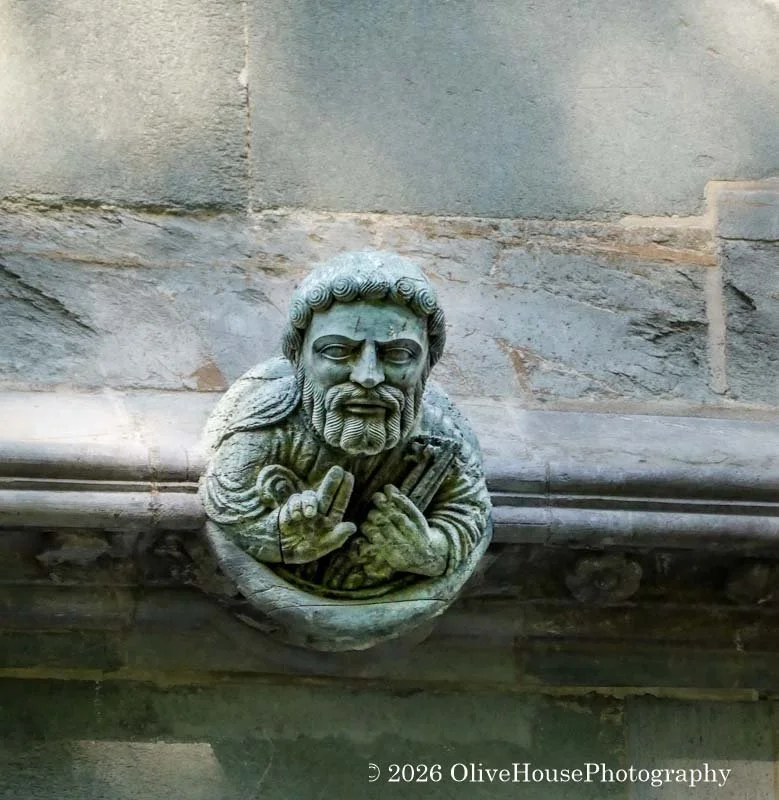
Stone sculpture on the Nidaros Cathedral in Trondheim, Norway, known as the "Blessing Monk".
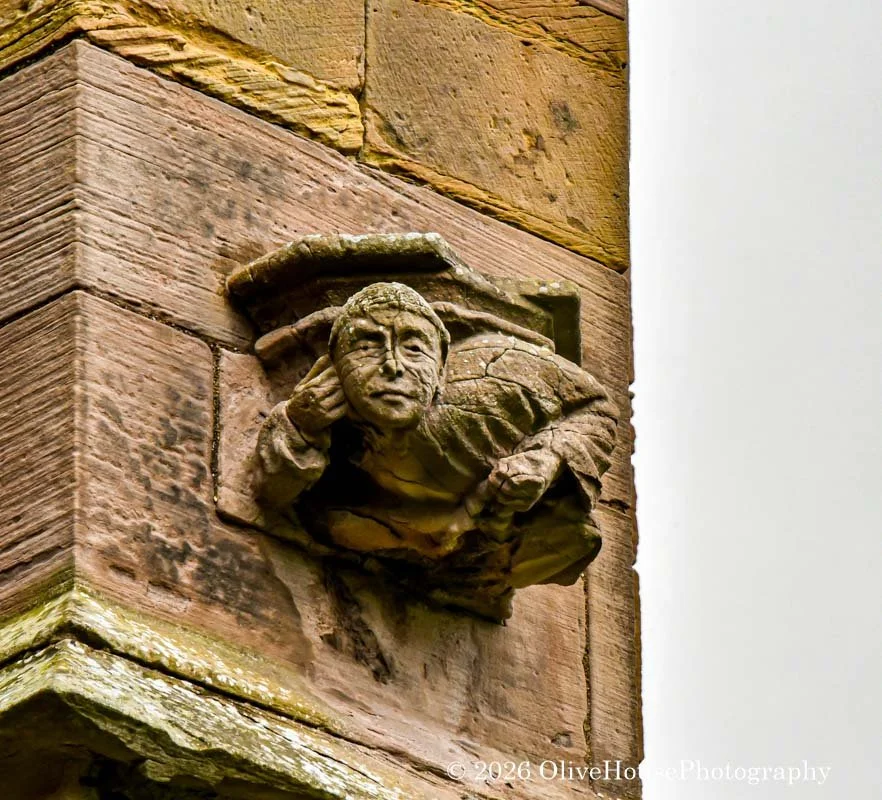
Grotesque on Melrose Abbey, Scotland.
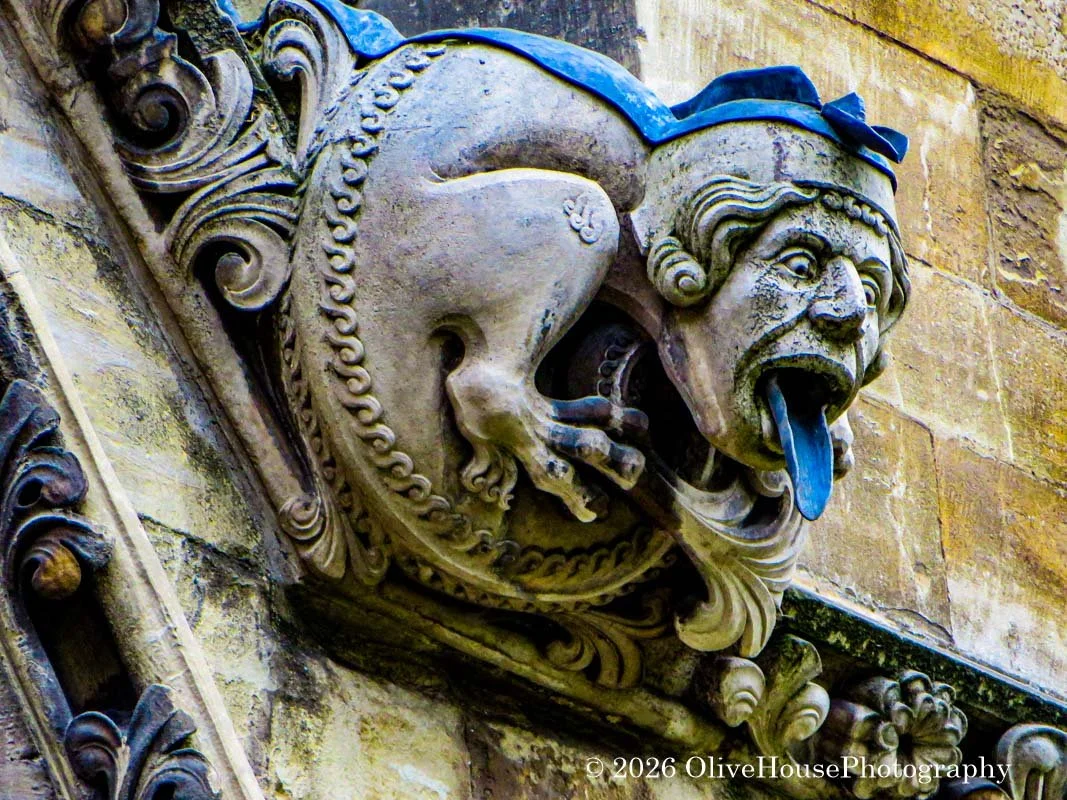
Gargoyle on Westminster Abby, London, England.
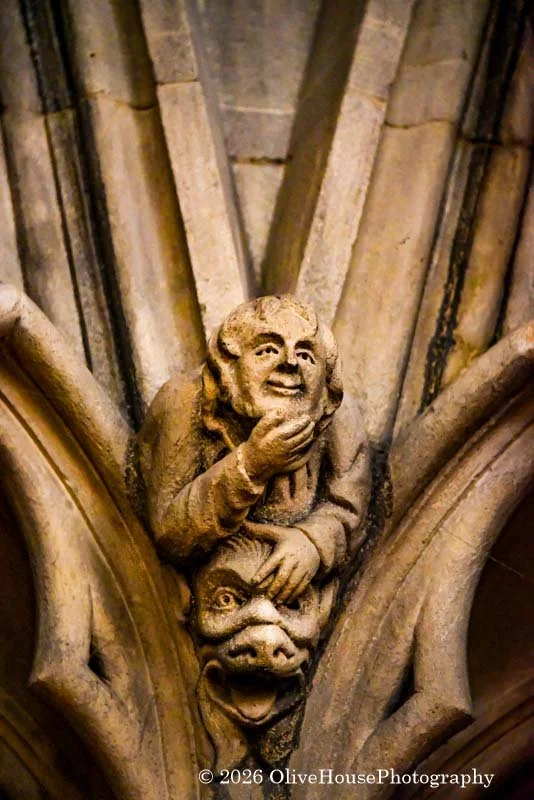
Grotesque inside York Minster, York, England
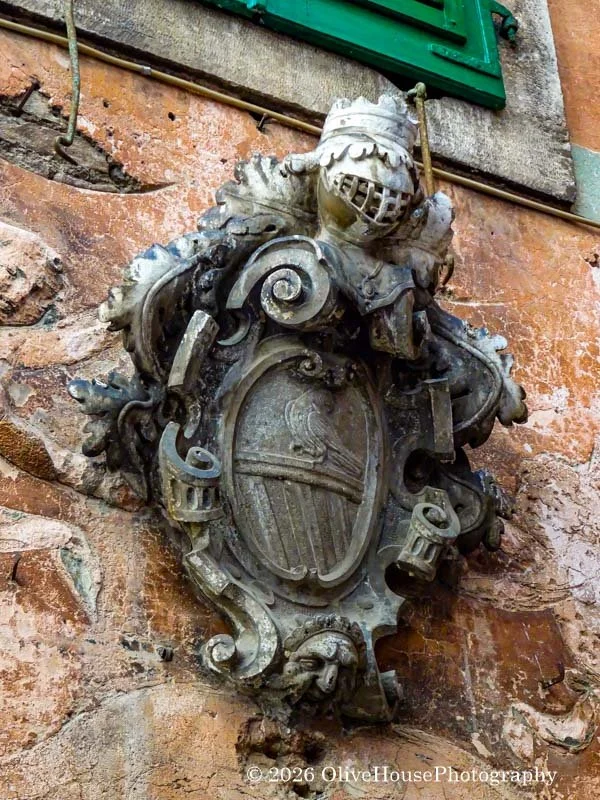
Coat of Arms on a building in Kotor, Montenegro.
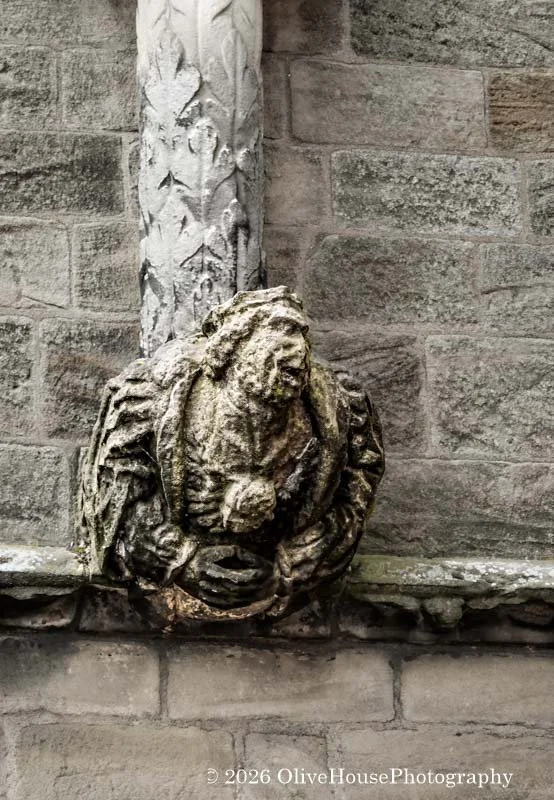
Gargoyle on the Royal Palace of Stirling Castle in Scotland.
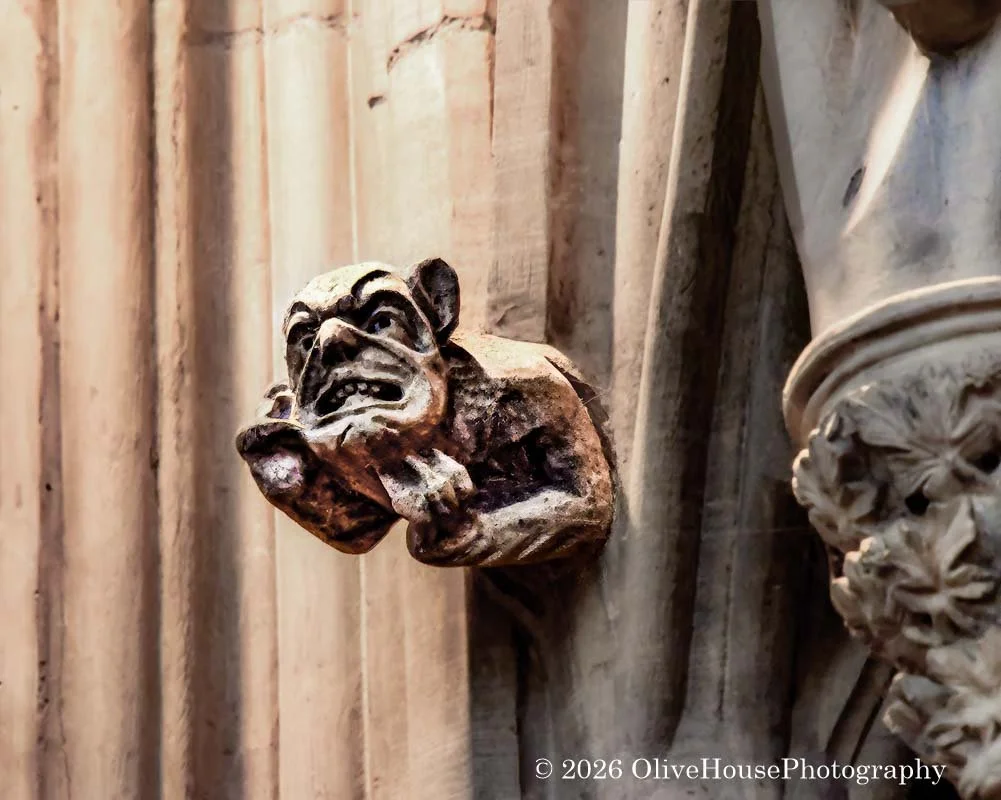
Grotesque on York Minster, York, England.
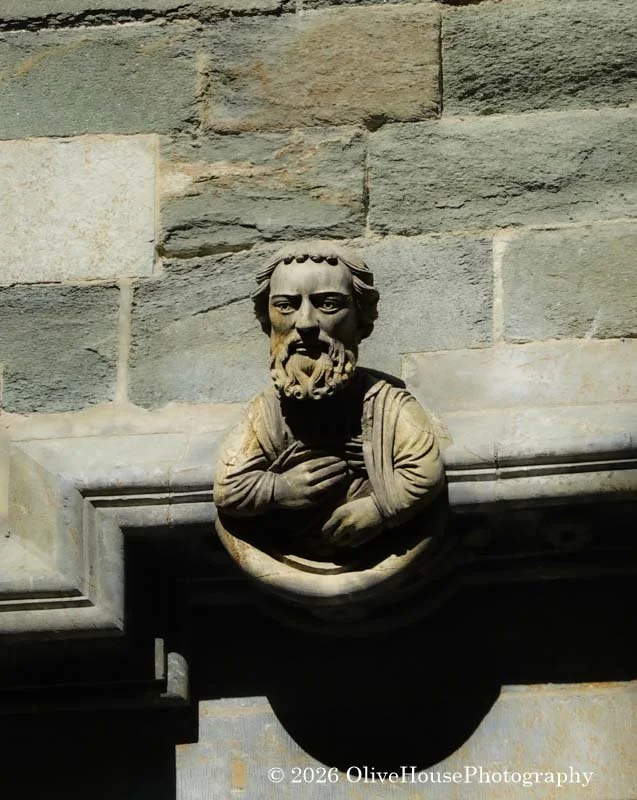
Stone sculpture located on the Nidaros Cathedral, Trondheim, Norway.